Items filtered by date: January 2023
Causes and Possible Ways to Improve Poor Circulation
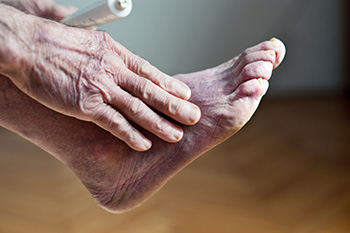
Many people suffer from poor circulation as the aging process occurs. It may also happen from specific health conditions including diabetes, obesity, and hardened arteries. Additionally, having a sedentary lifestyle and smoking can contribute to developing poor circulation. Common symptoms can consist of pain, numbness, or a tingling sensation in the feet. Some patients have cold feet, and may notice they have become discolored. This condition can show moderate improvement by incorporating exercise and stretches into the daily routine. Walking is an effective form of exercise, and it is beneficial to drink plenty of water. It is advised to include foods such as fatty fish, leafy greens, and cinnamon into daily eating habits, which is thought to be linked to possibly improving poor circulation. If you are experiencing the above symptoms, it is suggested that you confer with a podiatrist who can help you to manage and treat poor circulation.
While poor circulation itself isn’t a condition; it is a symptom of another underlying health condition you may have. If you have any concerns with poor circulation in your feet contact Matthew McQuaid, DPM of Lake Mendocino Podiatry. Our doctor will treat your foot and ankle needs.
Poor Circulation in the Feet
Peripheral artery disease (PAD) can potentially lead to poor circulation in the lower extremities. PAD is a condition that causes the blood vessels and arteries to narrow. In a linked condition called atherosclerosis, the arteries stiffen up due to a buildup of plaque in the arteries and blood vessels. These two conditions can cause a decrease in the amount of blood that flows to your extremities, therefore resulting in pain.
Symptoms
Some of the most common symptoms of poor circulation are:
- Numbness
- Tingling
- Throbbing or stinging pain in limbs
- Pain
- Muscle Cramps
Treatment for poor circulation often depends on the underlying condition that causes it. Methods for treatment may include insulin for diabetes, special exercise programs, surgery for varicose veins, or compression socks for swollen legs.
As always, see a podiatrist as he or she will assist in finding a regimen that suits you. A podiatrist can also prescribe you any needed medication.
If you have any questions, please feel free to contact our offices located in Lakeport and Ukiah, CA . We offer the newest diagnostic and treatment technologies for all your foot care needs.
Causes and Possible Ways to Improve Poor Circulation
Many people suffer from poor circulation as the aging process occurs. It may also happen from specific health conditions including diabetes, obesity, and hardened arteries. Additionally, having a sedentary lifestyle and smoking can contribute to developing poor circulation. Common symptoms can consist of pain, numbness, or a tingling sensation in the feet. Some patients have cold feet, and may notice they have become discolored. This condition can show moderate improvement by incorporating exercise and stretches into the daily routine. Walking is an effective form of exercise, and it is beneficial to drink plenty of water. It is advised to include foods such as fatty fish, leafy greens, and cinnamon into daily eating habits, which is thought to be linked to possibly improving poor circulation. If you are experiencing the above symptoms, it is suggested that you confer with a podiatrist who can help you to manage and treat poor circulation.
While poor circulation itself isn’t a condition; it is a symptom of another underlying health condition you may have. If you have any concerns with poor circulation in your feet contact Matthew McQuaid, DPM of Lake Mendocino Podiatry. Our doctor will treat your foot and ankle needs.
Poor Circulation in the Feet
Peripheral artery disease (PAD) can potentially lead to poor circulation in the lower extremities. PAD is a condition that causes the blood vessels and arteries to narrow. In a linked condition called atherosclerosis, the arteries stiffen up due to a buildup of plaque in the arteries and blood vessels. These two conditions can cause a decrease in the amount of blood that flows to your extremities, therefore resulting in pain.
Symptoms
Some of the most common symptoms of poor circulation are:
- Numbness
- Tingling
- Throbbing or stinging pain in limbs
- Pain
- Muscle Cramps
Treatment for poor circulation often depends on the underlying condition that causes it. Methods for treatment may include insulin for diabetes, special exercise programs, surgery for varicose veins, or compression socks for swollen legs.
As always, see a podiatrist as he or she will assist in finding a regimen that suits you. A podiatrist can also prescribe you any needed medication.
If you have any questions, please feel free to contact our offices located in Lakeport and Ukiah, CA . We offer the newest diagnostic and treatment technologies for all your foot care needs.
Surgery May Be Necessary for Hammertoe Recovery
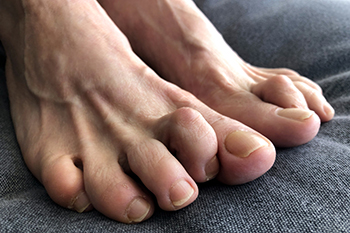
It’s easy to spot a person who has a hammertoe. It is a foot condition that is considered to be a deformity, and it is characterized by the middle toe that bends downward, forcing the joints up. It can be caused by various things, including wearing shoes that do not have ample room for the toes to move freely in or from medical conditions such as arthritis. This condition may also develop for genetic reasons, and surgery may be necessary so the toes can be permanently straightened. If the toes are severely bent, corns may develop where the joint touches the shoe, and this can cause additional discomfort. Specific types of shoes may need to be purchased to accommodate the deformed toes, and this may prompt patients to seek medical advice. If you are afflicted with hammertoe, it is strongly urged that you contact a podiatrist who can help you to remedy this condition.
Hammertoe
Hammertoes can be a painful condition to live with. For more information, contact Matthew McQuaid, DPM from Lake Mendocino Podiatry. Our doctor will answer any of your foot- and ankle-related questions.
Hammertoe is a foot deformity that affects the joints of the second, third, fourth, or fifth toes of your feet. It is a painful foot condition in which these toes curl and arch up, which can often lead to pain when wearing footwear.
Symptoms
- Pain in the affected toes
- Development of corns or calluses due to friction
- Inflammation
- Redness
- Contracture of the toes
Causes
Genetics – People who are genetically predisposed to hammertoe are often more susceptible
Arthritis – Because arthritis affects the joints in your toes, further deformities stemming from arthritis can occur
Trauma – Direct trauma to the toes could potentially lead to hammertoe
Ill-fitting shoes – Undue pressure on the front of the toes from ill-fitting shoes can potentially lead to the development of hammertoe
Treatment
Orthotics – Custom made inserts can be used to help relieve pressure placed on the toes and therefore relieve some of the pain associated with it
Medications – Oral medications such as anti-inflammatories or NSAIDs could be used to treat the pain and inflammation hammertoes causes. Injections of corticosteroids are also sometimes used
Surgery – In more severe cases where the hammertoes have become more rigid, foot surgery is a potential option
If you have any questions please contact our offices located in Lakeport and Ukiah, CA . We offer the newest diagnostic and treatment technologies for all your foot and ankle needs.
Surgery May Be Necessary for Hammertoe Recovery
It’s easy to spot a person who has a hammertoe. It is a foot condition that is considered to be a deformity, and it is characterized by the middle toe that bends downward, forcing the joints up. It can be caused by various things, including wearing shoes that do not have ample room for the toes to move freely in or from medical conditions such as arthritis. This condition may also develop for genetic reasons, and surgery may be necessary so the toes can be permanently straightened. If the toes are severely bent, corns may develop where the joint touches the shoe, and this can cause additional discomfort. Specific types of shoes may need to be purchased to accommodate the deformed toes, and this may prompt patients to seek medical advice. If you are afflicted with hammertoe, it is strongly urged that you contact a podiatrist who can help you to remedy this condition.
Hammertoe
Hammertoes can be a painful condition to live with. For more information, contact Matthew McQuaid, DPM from Lake Mendocino Podiatry. Our doctor will answer any of your foot- and ankle-related questions.
Hammertoe is a foot deformity that affects the joints of the second, third, fourth, or fifth toes of your feet. It is a painful foot condition in which these toes curl and arch up, which can often lead to pain when wearing footwear.
Symptoms
- Pain in the affected toes
- Development of corns or calluses due to friction
- Inflammation
- Redness
- Contracture of the toes
Causes
Genetics – People who are genetically predisposed to hammertoe are often more susceptible
Arthritis – Because arthritis affects the joints in your toes, further deformities stemming from arthritis can occur
Trauma – Direct trauma to the toes could potentially lead to hammertoe
Ill-fitting shoes – Undue pressure on the front of the toes from ill-fitting shoes can potentially lead to the development of hammertoe
Treatment
Orthotics – Custom made inserts can be used to help relieve pressure placed on the toes and therefore relieve some of the pain associated with it
Medications – Oral medications such as anti-inflammatories or NSAIDs could be used to treat the pain and inflammation hammertoes causes. Injections of corticosteroids are also sometimes used
Surgery – In more severe cases where the hammertoes have become more rigid, foot surgery is a potential option
If you have any questions please contact our offices located in Lakeport and Ukiah, CA . We offer the newest diagnostic and treatment technologies for all your foot and ankle needs.
Reminder: When Was the Last Time...?
Custom orthotics, or shoe inserts, should be periodically replaced. Orthotics must fit properly to give you the best results. Protect your feet and ankles!
Reminder: When Was the Last Time...?
Custom orthotics, or shoe inserts, should be periodically replaced. Orthotics must fit properly to give you the best results. Protect your feet and ankles!
Foot Pain Relief During Pregnancy
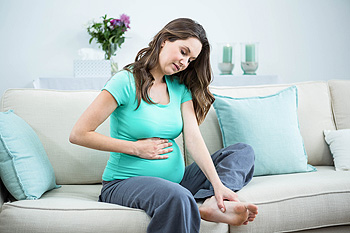
Foot pain can be common among pregnant women. This may be a result of the added weight that is gained from the growing fetus, and the feet may become swollen and achy. There are simple methods that can be implemented which can provide moderate relief. Elevating the feet as often as possible and avoiding standing for long periods at a time are generally successful in controlling foot pain from pregnancy. Many women enjoy getting foot massages during their pregnancy, and performing specific stretches can help aching feet. Additionally, it is beneficial to wear shoes that have a lower heel and are comfortable, and wearing cotton socks may help the feet to breathe. Pregnancy can bring joy and happiness, and it is suggested that a podiatrist be consulted who can treat existing foot pain, allowing fuller enjoyment during this time.
Pregnant women with swollen feet can be treated with a variety of different methods that are readily available. For more information about other cures for swollen feet during pregnancy, consult with Matthew McQuaid, DPM from Lake Mendocino Podiatry. Our doctor will attend to all of your foot and ankle needs.
What Foot Problems Can Arise During Pregnancy?
One problem that can occur is overpronation, which occurs when the arch of the foot flattens and tends to roll inward. This can cause pain and discomfort in your heels while you’re walking or even just standing up, trying to support your baby.
Another problem is edema, or swelling in the extremities. This often affects the feet during pregnancy but tends to occur in the later stages.
How Can I Keep My Feet Healthy During Pregnancy?
- Wearing orthotics can provide extra support for the feet and help distribute weight evenly
- Minimize the amount of time spent walking barefoot
- Wear shoes with good arch support
- Wear shoes that allow for good circulation to the feet
- Elevate feet if you experience swelling
- Massage your feet
- Get regular, light exercise, such as walking, to promote blood circulation to the feet
If you have any questions please feel free to contact our offices located in Lakeport and Ukiah, CA . We offer the newest diagnostic and treatment technologies for all your foot and ankle needs.
Reasons for Toe Pain
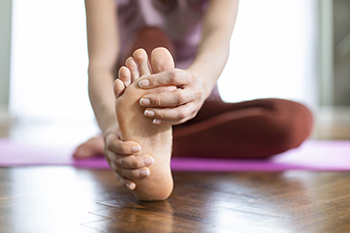
Toe pain can make every single step excruciating. Toe pain can have many different sources, including injuries, arthritis, and hammertoe. Some of these things can be treated with home care, and some need additional medical intervention. Gout is a form of arthritis that commonly affects the big toe. It is caused by a buildup of uric acid in the bloodstream, and crystals form, which settle in certain joints. It causes severe pain at the base of the big toe, redness, and swelling. Hammertoe is a deformity where toes bend abnormally in the middle joint. The downward flex of the joint looks like a hammer, thus its name. It is most common in the second, third, and fourth toes. A hammertoe can make it difficult to walk, and stretching and moving the toes can be impossible. If you have toe pain, see a podiatrist for medical treatment.
Toe pain can disrupt your daily activities. If you have any concerns, contact Matthew McQuaid, DPM of Lake Mendocino Podiatry. Our doctor can provide the care you need to keep you pain-free and on your feet.
What Causes Toe Pain?
Most severe toe pain is caused due to a sports injury, trauma from dropping something heavy on the toe, or bumping into something rigid. Other problems can develop over time for various reasons.
Toe pain can be caused by one or more ailments. The most common include:
- Trauma
- Sports injury
- Wearing shoes that are too tight
- Arthritis
- Gout
- Corns and calluses
- Hammertoe
- Bunions
- Blisters
- Ingrown toenails
- Sprains
- Fractures (broken bones)
- Dislocations
When to See a Podiatrist
- Severe pain
- Persistent pain that lasts more than a week
- Signs of infection
- Continued swelling
- Pain that prevents walking
Diagnosis
In many cases the cause of toe pain is obvious, but in others, a podiatrist may want to use more advanced methods to determine the problem. These can range from simple visual inspections and sensation tests to X-rays and MRI scans. Prior medical history, family medical history, and any recent physical traumatic events will all be taken into consideration for a proper diagnosis.
Treatment
Treatments for toe pain and injuries vary and may include shoe inserts, padding, taping, medicines, injections, and in some cases, surgery. If you believe that you have broken a toe, please see a podiatrist as soon as possible.
If you have any questions please feel free to contact our offices located in Lakeport and Ukiah, CA . We offer the newest diagnostic tools and technology to treat your foot and ankle needs.
Reasons for Toe Pain
Toe pain can make every single step excruciating. Toe pain can have many different sources, including injuries, arthritis, and hammertoe. Some of these things can be treated with home care, and some need additional medical intervention. Gout is a form of arthritis that commonly affects the big toe. It is caused by a buildup of uric acid in the bloodstream, and crystals form, which settle in certain joints. It causes severe pain at the base of the big toe, redness, and swelling. Hammertoe is a deformity where toes bend abnormally in the middle joint. The downward flex of the joint looks like a hammer, thus its name. It is most common in the second, third, and fourth toes. A hammertoe can make it difficult to walk, and stretching and moving the toes can be impossible. If you have toe pain, see a podiatrist for medical treatment.
Toe pain can disrupt your daily activities. If you have any concerns, contact Matthew McQuaid, DPM of Lake Mendocino Podiatry. Our doctor can provide the care you need to keep you pain-free and on your feet.
What Causes Toe Pain?
Most severe toe pain is caused due to a sports injury, trauma from dropping something heavy on the toe, or bumping into something rigid. Other problems can develop over time for various reasons.
Toe pain can be caused by one or more ailments. The most common include:
- Trauma
- Sports injury
- Wearing shoes that are too tight
- Arthritis
- Gout
- Corns and calluses
- Hammertoe
- Bunions
- Blisters
- Ingrown toenails
- Sprains
- Fractures (broken bones)
- Dislocations
When to See a Podiatrist
- Severe pain
- Persistent pain that lasts more than a week
- Signs of infection
- Continued swelling
- Pain that prevents walking
Diagnosis
In many cases the cause of toe pain is obvious, but in others, a podiatrist may want to use more advanced methods to determine the problem. These can range from simple visual inspections and sensation tests to X-rays and MRI scans. Prior medical history, family medical history, and any recent physical traumatic events will all be taken into consideration for a proper diagnosis.
Treatment
Treatments for toe pain and injuries vary and may include shoe inserts, padding, taping, medicines, injections, and in some cases, surgery. If you believe that you have broken a toe, please see a podiatrist as soon as possible.
If you have any questions please feel free to contact our offices located in Lakeport and Ukiah, CA . We offer the newest diagnostic tools and technology to treat your foot and ankle needs.
Foot Care for Skaters
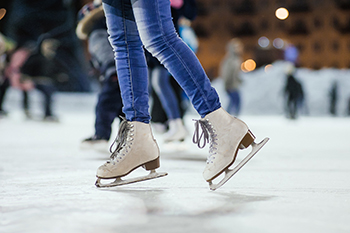
Foot injuries can have serious consequences for inline, ice, and roller sports participants. Skating, in and of itself, can cause pain on the bottom, top, or sides of the feet. Foot problems can result from improperly fitted skating boots, with lacing that is too tight over the instep. Stunts, spins, and jumps can put additional stress on the feet and skating requires quick turns and stops that are done using the feet and ankles. Wearing well-fitting boots, using lacing patterns, or using a pad to protect the top of the foot can relieve pressure from boot laces. Fabric liners and insoles that fit inside boots can provide comfort and support for feet and ankles. The goal is to prevent blisters when boots do not fit properly and pressure on the feet that can result in calluses and hammertoes. While some foot pain can be eased with rest and self-care, like proper stretching and warmups, if symptoms persist, see a podiatrist for a proper diagnosis and treatment options.
Ankle and foot injuries are common among athletes and in many sports. They can be caused by several problems and may be potentially serious. If you are feeling pain or think you were injured in a sporting event or when exercising, consult with Matthew McQuaid, DPM from Lake Mendocino Podiatry. Our doctor will assess your condition and provide you with quality foot and ankle treatment.
Common Injuries
The most common injuries that occur in sporting activities include:
- Achilles Tendonitis
- Achilles Tendon Rupture
- Ankle Sprains
- Broken Foot
- Plantar Fasciitis
- Stress Fractures
- Turf Toe
Symptoms
Symptoms vary depending upon the injury and in some cases, there may be no symptoms at all. However, in most cases, some form of symptom is experienced. Pain, aching, burning, bruising, tenderness, tightness or stiffness, sensation loss, difficulty moving, and swelling are the most common symptoms.
Treatment
Just as symptoms vary depending upon the injury, so do treatment options. A common treatment method is known as the RICE method. This method involves rest, applying ice, compression and elevating the afflicted foot or ankle. If the injury appears to be more serious, surgery might be required, such as arthroscopic or reconstructive surgery. Lastly, rehabilitation or therapy might be needed to gain full functionality in the afflicted area. Any discomfort experienced by an athlete must be evaluated by a licensed, reputable medical professional.
If you have any questions, please feel free to contact our offices located in Lakeport and Ukiah, CA . We offer the newest diagnostic and treatment technologies for all your foot care needs.
