
Fabry Disease and Its Impact on Foot Health

Fabry disease is a rare genetic disorder caused by a deficiency of an enzyme needed to break down certain fatty substances in the body. This buildup can affect multiple organs, including the nerves and blood vessels in the feet. Individuals may experience burning pain, tingling, numbness, and sensitivity to temperature, which can interfere with daily activities. Symptoms often begin in childhood or adolescence and may worsen over time. This condition is inherited. A podiatrist can help manage foot-related symptoms by assessing nerve function, recommending protective footwear, and providing strategies to reduce discomfort and prevent complications. Early recognition and care are important for maintaining mobility. If you have symptoms of Fabry disease, it is suggested that you consult a podiatrist who can provide an accurate diagnosis and treatment.

Some foot conditions may require additional professional care. If you have any concerns, contact Matthew McQuaid, DPM of Lake Mendocino Podiatry. Our doctor can provide the care you need to keep you pain-free and on your feet.

Rare Foot Conditions

The majority of foot conditions are common and can be treated by a podiatrist.  Standard diagnostic procedures are generally used to identify specific conditions and treatment can be rendered. A podiatrist also treats rare foot conditions which can be difficult to diagnose and may need extra attention and care. 

There are many rare foot conditions that can affect children. Some of these can include:

  • Freiberg’s disease
  • Kohler’s disease
  • Maffucci syndrome

Freiberg’s disease - This can be seen as a deterioration and flattening of a metatarsal bone that exists in the ball of the foot. It typically affects pre-teen and teenage girls, but can affect anyone at any age. Symptoms that can accompany this can be swelling, stiffness, and the patient may limp. 

Kohler’s disease - This often targets the bone in the arch of the foot and affects younger boys. It can lead to an interruption of the blood supply which ultimately can lead to bone deterioration. The patient may limp or experience tenderness, swelling, and redness.

Maffucci syndrome - This affects the long bones in a child’s foot leading to the development of abnormal bone lesions. They are benign growths and typically develop in early childhood and the bones may be susceptible to breaking. 

A podiatrist can properly diagnose and treat all types of rare foot conditions. If your child is affected by any of these symptoms or conditions, please don’t hesitate to call our office so the correct treatment method can begin.

If you have any questions, please feel free to contact our offices located in Lakeport and Ukiah, CA . We offer the newest diagnostic and treatment technologies for all your foot care needs.
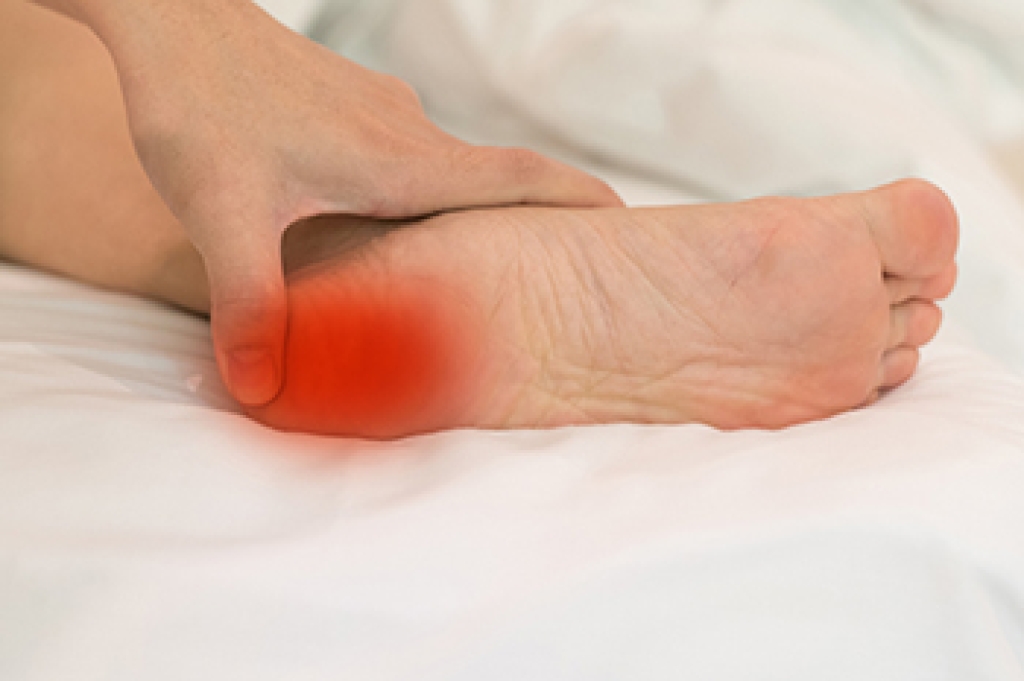
Read more about Rare Foot Conditions

Sever’s Disease and Growing Feet

Sever's disease affects children and teens, causing pain in the heel due to inflammation of the growth plate where the Achilles tendon attaches. It often develops during periods of rapid growth or increased physical activity, placing repeated stress on the heel. Symptoms include heel pain that worsens with running, jumping, or prolonged standing. Swelling and tenderness at the back of the heel are other symptoms. Risk factors include participation in sports, tight calf muscles, flat feet, and improper footwear that does not provide adequate support. Without proper care, discomfort may limit activity and affect mobility. A podiatrist can help by assessing foot mechanics, recommending supportive footwear or orthotics, and providing treatment to relieve pain. If your active child has heel pain, it is suggested that you consult a podiatrist who can offer appropriate relief solutions.

Sever's disease often occurs in children and teens. If your child is experiencing foot or ankle pain, see Matthew McQuaid, DPM from Lake Mendocino Podiatry. Our doctor can treat your child’s foot and ankle needs.

Sever’s Disease

Sever’s disease is also known as calcaneal apophysitis, which is a medical condition that causes heel pain I none or both feet. The disease is known to affect children between the ages of 8 and 14.

Sever’s disease occurs when part of the child’s heel known as the growth plate (calcaneal epiphysis) is attached to the Achilles tendon. This area can suffer injury when the muscles and tendons of the growing foot do not keep pace with bone growth. Therefore, the constant pain which one experiences at the back of the heel will make the child unable to put any weight on the heel. The child is then forced to walk on their toes.

Symptoms

Acute pain – Pain associated with Sever’s disease is usually felt in the heel when the child engages in physical activity such as walking, jumping and or running.

Highly active – Children who are very active are among the most susceptible in experiencing Sever’s disease, because of the stress and tension placed on their feet.

If you have any questions, please feel free to contact our offices located in Lakeport and Ukiah, CA . We offer the newest diagnostic and treatment technologies for all your foot care needs.
Read more about Sever's Disease

Are You Suffering From Ingrown Toenails?

If left untreated, an ingrown toenail can lead to more serious concerns, such as an infection. Knowing proper nail care can help in the prevention of an ingrown toenail. Give us a call, and get treated!

Causes of Mid-Foot Pain

Pain can develop when the structures in the middle of the foot become strained or damaged. This area contains joints, bones, and soft tissue that help support body weight during walking. Common causes of mid-foot pain include stress fractures, which are small cracks in the bone from repeated pressure, and arthritis, which leads to joint inflammation and stiffness. Tendon pain, known as tendinitis, may also occur when tendons become overworked. In some cases, nerve problems like a neuroma can cause burning or sharp pain. Foot shape and alignment issues can place uneven pressure on the mid-foot, leading to discomfort over time. A podiatrist can evaluate gait and order X-rays or other imaging to identify the exact source of pain. Treatment options include bracing, custom orthotics, or surgery in more serious cases. If you are experiencing mid-foot pain, it is suggested that you make an appointment with a podiatrist for treatment.

Foot Pain

Foot pain can be extremely painful and debilitating. If you have a foot pain, consult with Matthew McQuaid, DPM from Lake Mendocino Podiatry. Our doctor will assess your condition and provide you with quality foot and ankle treatment.

Causes

Foot pain is a very broad condition that could be caused by one or more ailments. The most common include:

  • Bunions
  • Hammertoes
  • Plantar Fasciitis
  • Bone Spurs
  • Corns
  • Tarsal Tunnel Syndrome
  • Ingrown Toenails
  • Arthritis (such as Gout, Rheumatoid, and Osteoarthritis)
  • Flat Feet
  • Injury (from stress fractures, broken toe, foot, ankle, Achilles tendon ruptures, and sprains)
  • And more

Diagnosis

To figure out the cause of foot pain, podiatrists utilize several different methods. This can range from simple visual inspections and sensation tests to X-rays and MRI scans. Prior medical history, family medical history, and any recent physical traumatic events will all be taken into consideration for a proper diagnosis.

Treatment

Treatment depends upon the cause of the foot pain. Whether it is resting, staying off the foot, or having surgery; podiatrists have a number of treatment options available for foot pain.

If you have any questions, please feel free to contact our offices located in Lakeport and Ukiah, CA . We offer the newest diagnostic and treatment technologies for all your foot care needs.

Read more about Foot Pain

Types of Corns on the Feet

Corns are thickened areas of skin that develop due to  stress on the foot. They form as a protective response to repeated pressure or friction, and may affect gait and cause considerable pain. Hard corns are dense and typically appear on the tops of toes or pressure points. Soft corns develop between toes where moisture is present and often appear whitish and tender. Seed corns are small and form on the bottom of the foot, sometimes in clusters. Symptoms include localized pain, thickened skin, and discomfort while walking. Risk factors include wearing ill-fitting shoes, foot deformities, and repetitive friction. A podiatrist can safely remove corns, relieve pressure, and recommend proper footwear. If you have developed a corn on your foot, it is suggested that you consult a podiatrist who can offer effective relief and prevention tips.

Corns can make walking very painful and should be treated immediately. If you have questions regarding your feet and ankles, contact Matthew McQuaid, DPM of Lake Mendocino Podiatry. Our doctor will treat your foot and ankle needs.

Corns: What Are They? And How Do You Get Rid of Them?
Corns are thickened areas on the skin that can become painful. They are caused by excessive pressure and friction on the skin. Corns press into the deeper layers of the skin and are usually round in shape.

Ways to Prevent Corns
There are many ways to get rid of painful corns such as:

  • Wearing properly fitting shoes that have been measured by a professional
  • Wearing shoes that are not sharply pointed or have high heels
  • Wearing only shoes that offer support

Treating Corns

Although most corns slowly disappear when the friction or pressure stops, this isn’t always the case. Consult with your podiatrist to determine the best treatment option for your case of corns.

If you have any questions, please feel free to contact our offices located in Lakeport and Ukiah, CA . We offer the newest diagnostic and treatment technologies for all your foot care needs.

Read more about Corns and Calluses
scroll-to-top
Request Appointment